The program in figures
Information about the program
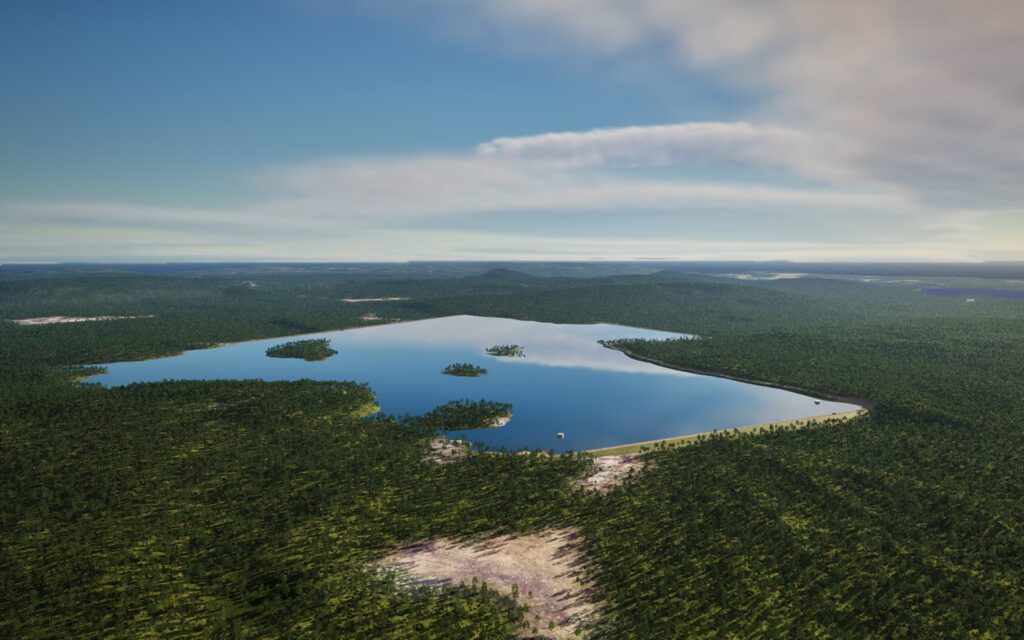
The Noste program consists of Kapusta and Vaaranlammet pumped hydro energy storage project sites, which are being developed as separate projects. The projects are moderate in scale, with planned capacity of 50-100 MW each. Each project area comprises a production area of approximately 1,100 hectares, as well as electricity transmission infrastructure required for the project.
What is pumped hydro energy storage?
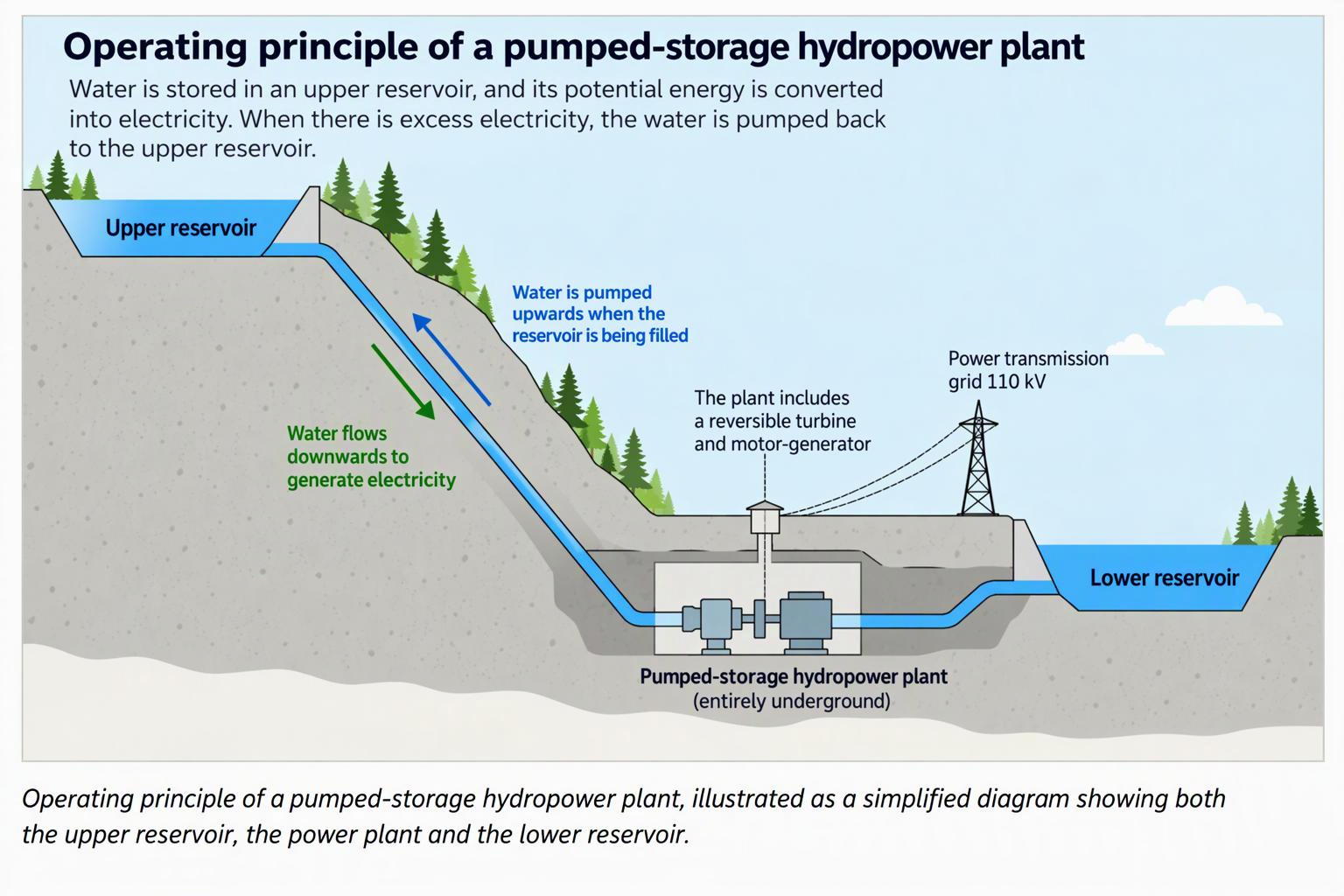
The purpose of pumped hydro energy storage is to store electricity and generate electricity when supply is more limited.
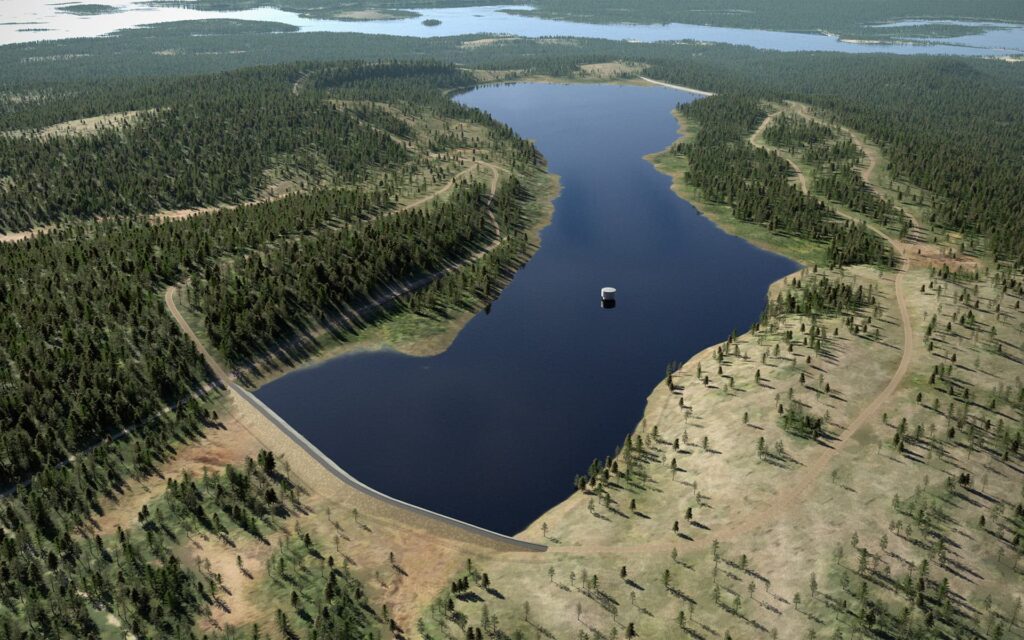
The system works by releasing water from an upper reservoir through turbines into the watercourse below. Water is pumped into the upper reservoir when electricity is abundant and released to generate electricity when supply is more limited.
Why do we need pumped hydro energy storage?
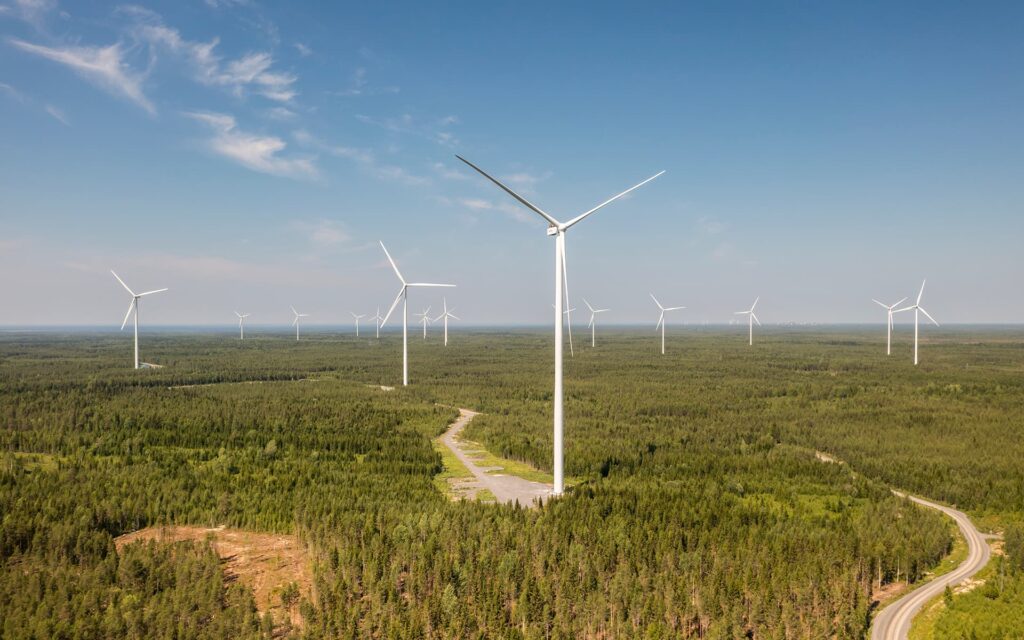
The need for electricity storages and the development of balancing capacity has increased significantly in Finland in recent years, as more weather-dependent wind and solar power capacity has been built.
By balancing fluctuations in weather-dependent electricity generation, pumped hydro energy storage helps stabilize the electricity system, supports the availability of electricity and contributes to a stable operating environment for industry.
Although hydro energy storage power plants have previously been built in Finland, pumped hydro is one of the oldest methods of storing energy. Pumped-storage power plants are widely used in countries such as Norway and Austria, where geographical conditions are favorable for their development.
Why are pumped-storage power plants being planned in Kemijärvi?
Pumped-storage power plants require sufficient water resources and gross head.
Kemijärvi’s geographical conditions, extensive waterways and variations in elevation provide favorable conditions for pumped hydro energy storage. Furthermore, the area has an existing, well-developed electricity grid.
The development of the pumped hydro energy storage project in Kemijärvi has been supported by good cooperation with local landowners. The necessary land-use rights are based entirely on voluntary agreements.
How does pumped-storage power plant affect the local environment?
As with all human activity, pumped hydro energy storage projects also have an impact on the environment. However, the starting point of the planning process is to minimize any adverse environmental impacts. Pumped hydro energy storage projects are subject to a statutory EIA procedure, during which the potential impacts of the projects are assessed.
We will provide further information on the identified environmental impacts as the EIA process progresses. As part of the EIA procedure, we will assess the projects’ impacts on the following areas, among other things:
Water bodies
Fauna and flora
Landscape and cultural environment
People’s living conditions and quality of life
Further details on the environmental impact assessment of the Kapusta and Vaaranlammet pumped hydro energy storage projects can be found on the ymparisto.fi website:
Significant regional economic impacts
We want to build a pumped hydro energy storage power plant in Kemijärvi that will strengthen the vitality of the region well into the future.
The construction of pumped hydro energy storage power plant will have significant positive impacts on the economy and business activity in Kemijärvi and neighboring municipalities. The project will create jobs both during construction and operation and generate municipal and real estate tax revenues for the municipality.
Program objectives
Promoting the green transition requires the rapid expansion of renewable energy capacity. Alongside weather-dependent electricity generation, flexible and rapidly deployable balancing power is needed to ensure the availability of electricity in all circumstances. Pumped hydro energy storage is an effective way of balancing the intermittent mismatch between electricity generation and consumption.
We want to build pumped hydro energy storage power plants in Kemijärvi that respect the landscape, waterways and communities of Kemijärvi. Through the Noste program, our aim is to strengthen Kemijärvi’s vitality well into the future by creating jobs and business opportunities across a wide range of sectors.
The two pumped hydro energy storage projects
The project consists of the Kapusta and Vaaranlammet pumped hydro energy storage power plants, which are being developed as separate projects.
The Kapusta Pumped Hydro Energy Storage Project
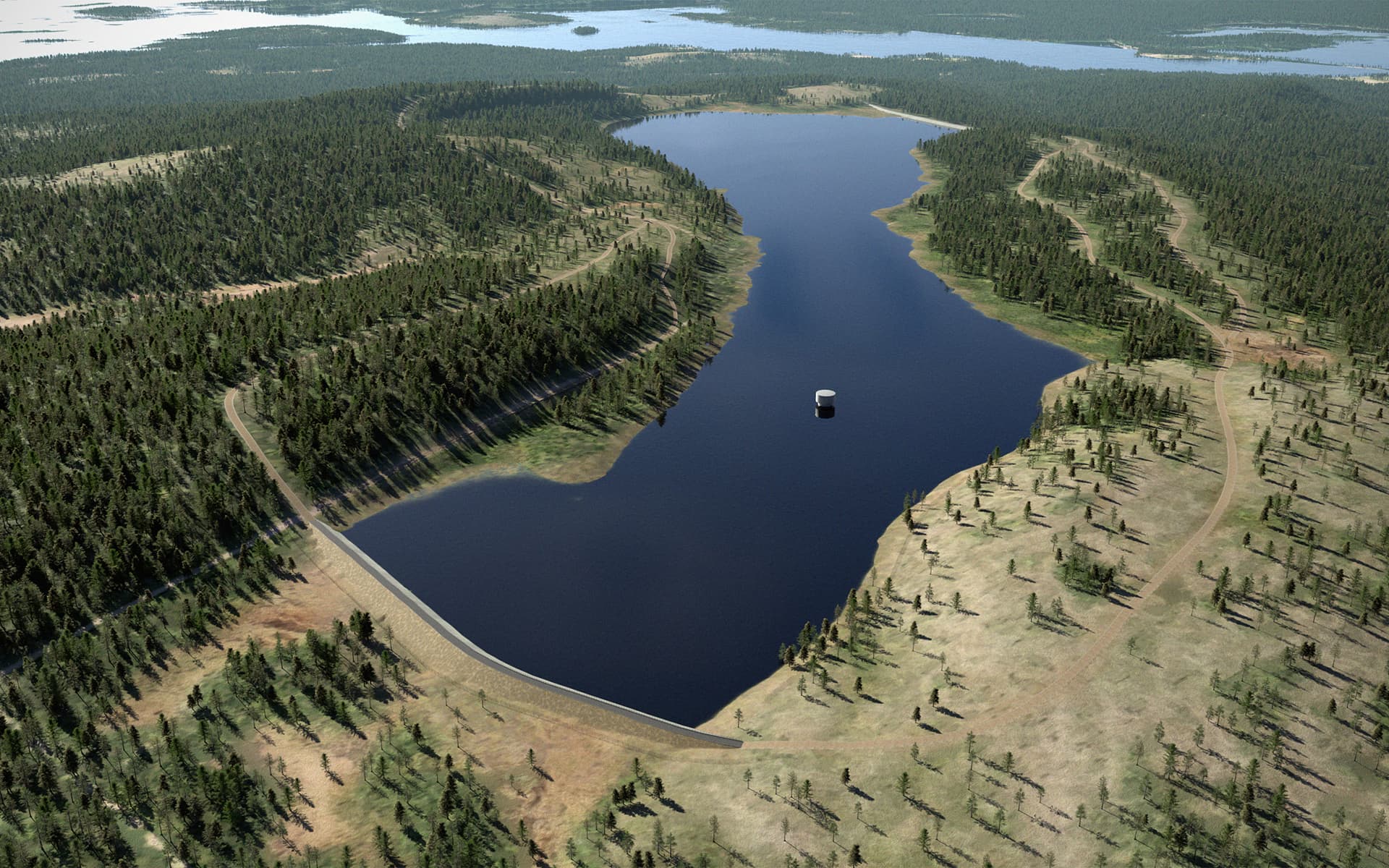
The Kapusta pumped hydro energy storage project is being planned for the Kapusta area in Kemijärvi, along the River Kemijoki. The project site is located approximately 34 kilometers south of the municipality center of Kemijärvi.ㅤㅤㅤ


About the project area
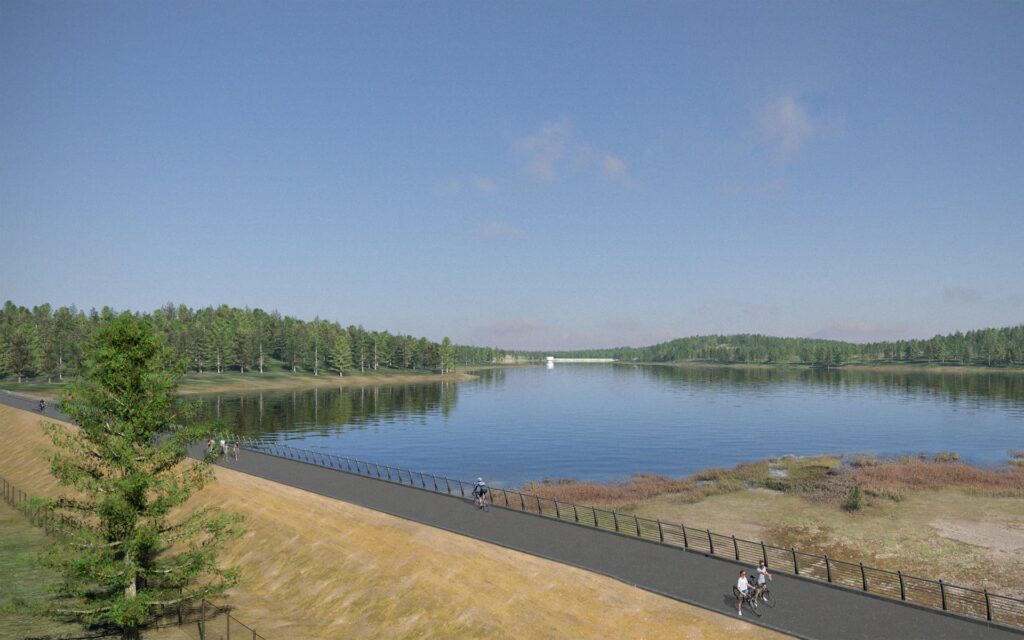
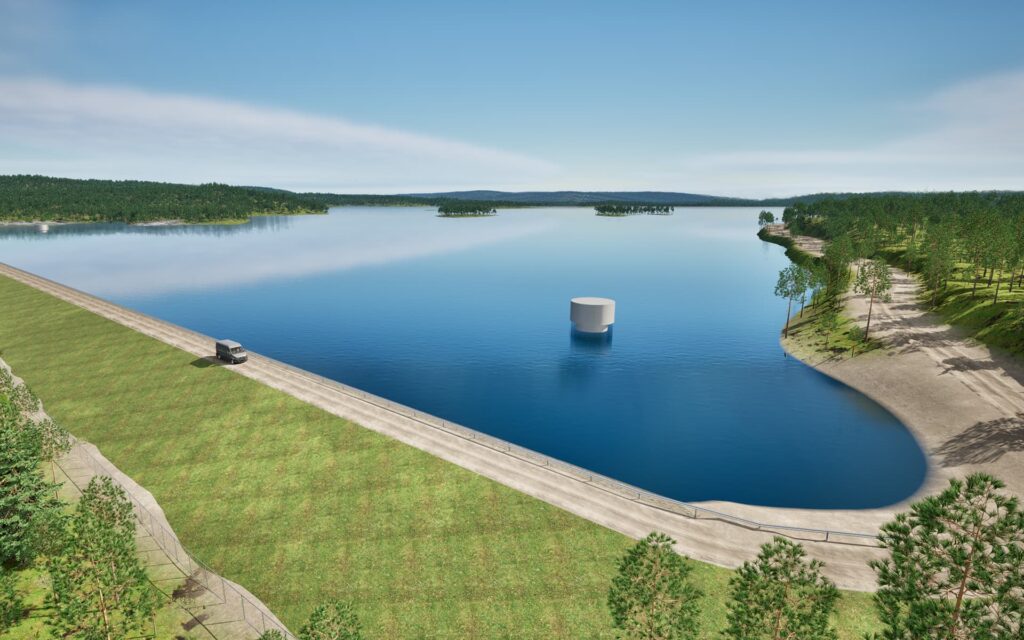
The project area comprises a production area of approximately 1,100 hectares, as well as the electricity transmission infrastructure required by the project. The volume of the upper reservoir would be approximately 9 Mm³. The project is planned to be connected to the electricity grid via either the Seitakorva substation in Kemijärvi or the Pirttikoski substation in Rovaniemi. The construction period for the project is approximately 3.5 years, and the operational lifetime of the facility is approximately 60 years.
Project timeline
2024 Launch of the local master planning and EIA processes
2024: Beginning of environmental and ecological surveys
2024 Participation and Assessment Scheme (OAS) for the Local Master Plan available for public review
2025 EIA program and draft local master plan available for public review
2026: Completion of the EIA report
2027 Local master plan proposal and completion of the land-use planning process
2027–2028 Water permit and construction permits
2028 – Start of construction
2030 – Commissioning in the early 2030s
The Vaaranlammet Pumped Hydro Energy Storage Project
Plans are being drawn up for the Vaaranlampi pumped-storage power station project in the lakeside area of Kemijärvi, in the Vaaranlampi area of Räisälä. The project site is situated approximately 25 kilometres south-east of the centre of Kemijärvi.
About the project area
The project area comprises a production area of approximately 1,100 hectares and the electricity transmission infrastructure required for the project. The volume of the upper reservoir would be approximately 12 Mm³. The project is planned to be connected to the electricity grid via either the Seitakorva substation in Kemijärvi or the Pirttikoski substation in Rovaniemi. The construction of the pumped-storage power station will take approximately 3.5 years, and the operational lifetime of the facility is approximately 60 years.
Project timeline
2024–2025: Launch of the local master planning and EIA processes
2025: Beginning of environmental and ecological surveys
2025 Participation and Assessment Scheme (OAS) and draft local master plan available for public review
2026 EIA program available for public review
2027: Completion of the EIA report
2027–2028 Local master plan proposal and completion of the land-use planning process
2028–2029 Water permit and construction permits
2029 – Start of construction
2030 – Commissioning in the early 2030s
Program documents and publications
Communication with stakeholders
We want to develop the Kapusta and Vaaranlammet pumped hydro energy storage projects in collaboration with local communities and stakeholders.
We maintain an ongoing dialogue with local organisations and are open to various forms of collaboration. We are keen to hear which forms of participation and communication would best meet the needs of local stakeholders. Please feel free to get in touch